

Mom passed away years ago. Maybe Dad went first. Maybe it was Grandma. The house is still standing, the tax bill still comes in her name, and nobody ever changed a thing on paper. If you have a house still in deceased parents name, you are not the only one. It is the most common call we get.
I’m Raul Bolufe. My company buys inherited houses and heir shares across Texas.
I’m not a lawyer and this is not legal advice. It is what we have seen on our deals.
This guide covers why it happens, what it costs, what families did, and how we bought a house still in deceased parents name anyway, or one heir’s piece of it. Names are changed or left out. Every story here comes from our own files.
Why is a house still in deceased parents name years later?
Because nothing makes anybody change it.
When a parent dies, the county does not call. The deed sits at the courthouse with the same name on it for as long as nobody touches it.
The reasons a family ends up with a house still in deceased parents name are almost always ordinary. Somebody called a lawyer about probate, heard a price they did not have, and hung up. Somebody figured the brother living there would take care of it. And in a lot of families, nobody wanted to be the one to make the next call.
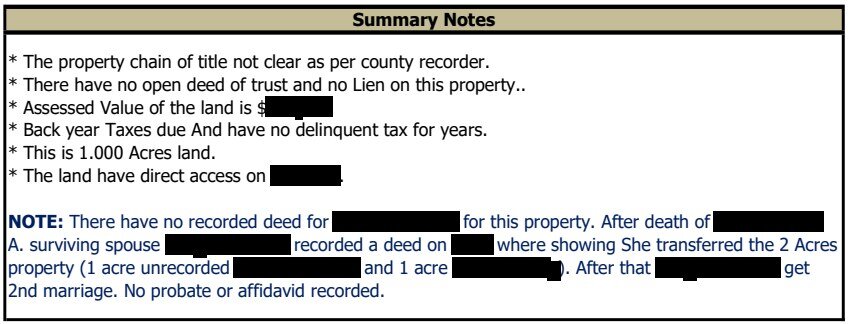
Outside Alvarado, in Johnson County, a family had two lots that their granddad bought and paid for over time. He told their dad he was not really worried about that little bit of property. So nobody worried about it. For decades. The land never made it into their name, and the family had no idea there was a paper trail they could fix.
A house still in deceased parents name is not proof that the family did something wrong. Usually it means everybody was busy grieving, working, and raising kids. Then one year became ten.
What problems does it cause when nobody changes the name?
Nothing happens to a house still in deceased parents name at first. That is the trap. Then it all happens at once.
The taxes keep running. The bill still goes out in Mom’s name, sometimes to an address nobody checks. In Missouri City, the property taxes on a house went unpaid for sixteen years after the owner died, and the letters kept coming addressed to him. Mail with a dead man’s name on it is the easiest mail in the world to ignore.
You cannot sell it the normal way. A buyer and a title company want to know who owns the house today. With a house still in deceased parents name, nobody can answer that yet. On a regular sale with a realtor, that stops everything.
You cannot borrow against it. Families ask me about refinancing. I’m not a lender, so ask yours. Here is what happened in Missouri City. The family kept paying the mortgage every month after the dad died and never told the mortgage company. When the house finally sold, the title company asked for a payoff, and the whole closing stopped while the paperwork caught up.
Somebody moves in. An empty house still in deceased parents name attracts people. Sometimes it is a family friend. Sometimes it is a relative who never leaves. In Odessa, a family friend had been living in a house three sisters inherited from their mother. On another house, where the grandmother had passed, we had to do an eviction and a huge cleanup before it was worth anything to anybody.
The family tree keeps growing. This is the one nobody sees coming. On our deals, when one of the children died too, their piece did not disappear. It went down to their kids. So every year it sits, the list of people who have to sign can get longer.
Liens and violations pile up. Old judgments, HOA letters, code violations, and city liens all find a house still in deceased parents name eventually. In Johnson County, a credit card company had a judgment against the man who died, filed by a department called deceased customers collections. I did not know that department existed either.
Who owns a house that is still in a dead parent’s name?
Who owns a house still in deceased parents name is the question under every other question. I’m not going to give you a legal answer. I’ll tell you how it played out on our deals.
On our deals, the owner was never decided by who lived there, who paid the taxes, or who the family thought should get it. It was decided by the paperwork and the family tree. A few examples.
- Willis. A mother passed away. The title report found no probate and no will. Her son was the heir, and he was the one who sold to us.
- Brazoria County. A widow was sure she was the only one. Our research found two children from her husband’s first marriage she did not seem to know about.
- Odessa. One sister moved into her mother’s house and caught up the taxes out of her own pocket. Her two sisters still owned their pieces.
That is why, on every house still in deceased parents name, we run a title search and build the family tree before anybody gets paid. Families are not wrong on purpose. Memory is just a bad filing system.
If you want the bigger picture, we wrote a page on Texas heir property.
What have families done with a house still in deceased parents name?
Here is what we have seen, roughly in the order families try it.
Leave it alone. The most popular choice for a house still in deceased parents name, and the most expensive one. Taxes, liens, and somebody living there for free.
Go through probate. Some families did it before they ever called me, so it was no longer a house still in deceased parents name. In Woodbranch, one heir had probate finished and the house already in his name. I made him a cash offer, and we closed through a title company. A normal, quick sale. If you want to know what probate looks like for a regular family, read about the Texas probate process from the heirs side.
Sign an affidavit of heirship. On most of our deals for a house still in deceased parents name, this did the job instead of probate. It is the family tree written down and sworn to, signed in front of a notary with two witnesses who knew the family and do not inherit anything. Here is the full guide on what an affidavit of heirship is in Texas.
Sell the whole house together. This works when everybody agrees. Three sisters in Houston signed one package, and the house sold. On a house in Cleveland, there were three heirs plus a person with a life estate. I took over the life estate interest, then partnered with the heirs. We listed it together, we handled everything, it sold, and we split the profit with them.
Sell your own share. This is for when the family does not agree. Your piece is yours, and you can sell it without the rest of the family. We wrote more on how we sell an inherited house without probate in Texas, and here is how to sell your share of an inherited house in Texas.
Can you sell a house still in deceased parents name?
On our deals, yes. Most of the inherited houses we buy never went through probate at all.
The text I send families says we can put cash in their pocket without them having to pay for or go through a full probate, and that we can buy individual shares even if not everyone agrees.
Here is what happens after you call us about a house still in deceased parents name.
- Title search. We find out whose name is really on it and what is owed. We get title back fast because of our own team.
- Family tree. We figure out who inherited, including the cousin nobody has called since the funeral.
- Affidavit of heirship. The outside attorneys and paralegals we work with draft it. You give us names, dates, and anybody who knew the family.
- A mobile notary comes to you. Your kitchen table, your job, a hospital room. Wherever you are.
- The deed records and you get paid. When there are several heirs, nobody gets paid until everyone who agreed has signed. That protects everybody.
- The problems become ours. Back taxes, liens, violations, the person living there.
It does not always go smoothly on the first try. In Willis, two grandsons inherited their grandmother’s mobile home because their dad died before she did. Our first affidavit came back from the title company. They wanted more detail on the grandmother’s marriages. A caretaker who had lived with her still had the family’s papers, and that helped us fill the gaps. The second version was accepted, and the deal closed with a title policy.
Title companies send things back. It is their favorite hobby.
What if the house is still in Grandma’s name, or goes back generations?
A house still in deceased parents name from generations back has a bigger family tree. It is not a dead end. The best example I have is six acres of land near Shepherd, in San Jacinto County. Here is how it went, beat by beat.
The owner on the record had died. Nobody changed the deed, so it stayed in a deceased owner’s name while the family kept growing. By the time we got involved, there were nine heirs spread across four states, Texas, Oklahoma, Colorado, and Arkansas. Four of the nine were great grandchildren.
The family built the tree with us. We needed marriage dates and death dates. The heirs texted them to us themselves. Answer the text when someone asks for a date. You might be the only person who remembers it.
There was a tax sale date on the calendar. We paid the court costs and fees to the county’s tax attorneys, and the property was pulled the day before the sale.
The notary drove an hour. One heir lived out in the country, and the only notary willing to make the trip was about an hour away. She went anyway.
The county would not take deeds online. So a supervisor from the mobile notary company we use drove all nine deeds to the clerk herself. Every deed recorded.
Nine heirs, four states, one sale date, and nobody had to leave home. Somebody always has a cousin in Oklahoma.
Grandma’s house works the same way. In Willis, the two grandsons inherited because their dad died before she did. And outside Alvarado, the paper trail on those two lots ran all the way back to the 1850s. The first title company would not touch it. A second title company closed it.
What if somebody is living in the house?
When somebody is living in a house still in deceased parents name, it depends a lot on who.
A family friend or a stranger. That is usually workable. In Odessa, a family friend had been in the house for years. We offered cash for keys, which means we paid them to move out on a schedule that worked for them. They took it. One of the sisters, Tina, left us a review afterward: “I was able to sell the house at the most needed time. It had become such a weight on me from my past, causing nothing but grief. So glad to be rid of it.” If your family’s place is out in the Permian, here is how we buy inherited houses in Odessa.
An heir who wants to stay. If the house is somebody’s home, we usually pass on buying the whole thing. We are not in the business of putting a family out of a house they grew up in. Sometimes we still buy the share of an heir who does not live there. In Missouri City, an uncle owned half of a house his nephew lives in. The uncle had years of back taxes in his name and wanted his name off of it. He signed at his kitchen table, and the back taxes became our problem instead of his.
What if the taxes are years behind?
Then you are in good company. Almost every house still in deceased parents name that we buy is behind on taxes.
In Brazoria County, three heirs owned a lot near the water that was headed to the tax auction. They figured it was already over and they would get nothing. It was not over. They still owned it, so they could still sell it. They signed with us, we cleaned up the title and sold it, and they got some money before it went to auction instead of nothing after.
Here is the line I want you to remember. Once you sell to us, liens and violations become our problem. We call, we negotiate, we pay. Child support liens, judgments, code violations, HOA letters, demolition orders. Property taxes and IRS liens are different. Those get paid, not negotiated. But you are not the one paying them.
If back taxes are what keeps you up at night, here is how we handle an inherited house with back taxes in Texas.
One heir, several heirs, or generations back: what happened on our deals
Every house still in deceased parents name is different. This is what we saw on our own deals. It is not legal advice.
| Your situation | What we have seen happen on our deals |
|---|---|
| One heir | The easiest kind. In Willis, a son sold his mother’s house to us with no probate and no will on file. In Woodbranch, probate was already done and the house was in the heir’s name, so it was a normal quick sale. Near Pearland, a widow was the only signer, and the title company still wanted her husband’s paperwork. |
| Several heirs who agree | Everybody signs, and the notary goes to each of them. Three sisters in Houston signed one package. Nine heirs in four states signed on land near Shepherd, and every deed recorded. On a house in Cleveland, we partnered with the heirs, listed it, and split the profit. |
| Heirs who are not on the same page | The heir who wants out sells their own share, and the rest becomes our job. In Missouri City, an uncle sold us his half of a house his nephew lives in. In Odessa, three sisters who had not spoken in years each signed on their own. |
| Generations back | A bigger family tree and more searching. Near Shepherd, nine heirs in four states, four of them great grandchildren, and every deed recorded. In Johnson County, a paper trail back to the 1850s closed with a second title company. |
What this means for you
- A house still in deceased parents name does not fix itself, and it does not go away. Taxes and liens grow while it sits.
- Who lives there or who pays the taxes did not decide who owned the house on our deals. The family tree did.
- You do not need the whole family on board to sell your own piece.
- Old is not hopeless. The Shepherd land had great grandchildren in the heir list, and every deed recorded.
- If somebody is living in your house still in deceased parents name, tell us on the first call. A friend, a renter, and an heir are three very different conversations.
- Once you sell to us, the back taxes, liens, and violations are ours to handle.
The short version
- The most common call we get is a house still in Mom’s or Dad’s or Grandma’s name, years later.
- It happens because nothing forces anybody to change it.
- It costs the family in taxes, liens, people moving in, and a family tree that keeps growing.
- On our deals, a house still in deceased parents name usually never went through probate. An affidavit of heirship did the job.
- When the family agrees, we buy the whole house or partner on a sale. When it does not, we buy individual shares.
- Liens and violations become ours once you sell. Property taxes and IRS liens get paid, not negotiated.
If you would rather sell the whole place for cash than just your piece, here is how we buy inherited houses for cash in Texas. And if your family’s house is around Houston, here is how we buy houses fast in Houston.
Frequently asked questions
How long can a house stay in a dead parent’s name?
On our deals, we have seen a house still in deceased parents name sit for decades. In Missouri City, the taxes went unpaid for sixteen years after the owner died, and the Johnson County lots had never been in the family’s name at all. Nothing forced a change. The taxes and the family tree just kept growing.
If I pay the taxes, does that make the house mine?
Not on our deals. In Odessa, one sister moved into her mother’s house and caught up the taxes herself. Her two sisters still owned their pieces. On our deals, the family tree decided who owned it.
Do I have to pay the back taxes before I can sell?
No. On a house still in deceased parents name, the families on our deals did not pay the back taxes first. Once you sell to us, the taxes come off at closing and we handle them. Liens and violations become our problem too. Property taxes and IRS liens get paid, not negotiated.
What if I do not know every relative who might be an heir?
That is normal with a house still in deceased parents name. Tell us what you have heard, even the rumors. In Willis, two grandsons were worried their dad had other kids. Our research team ran the family tree twice and it came back the same. Near Shepherd, the heirs texted us the marriage and death dates themselves.
Can I sell a house still in deceased parents name if my brother or sister says no?
You can sell your own share. On our deals, heirs sold their piece without the rest of the family agreeing. The uncle in Missouri City did it while his nephew stayed in the house.
What if Mom left a will that nobody took to court?
Here is what we usually see. The will is in a drawer, or somebody recorded it at the county, and the family thinks that settles it. Cath, the paralegal we work with, put it in plain words for me. Recording a will is paperwork. Probating it is what gives the will its power. If the will matters to your family, talk to a probate attorney soon. That is one call I cannot make for you.
If you have a house still in deceased parents name and you are tired of the tax letters, call or text me at 936-380-6384, or fill out the form. Tell me the address and who passed away. Sorting out the family tree is our job, not yours.
Find out what your share is worth
No cost and no obligation. Tell us the address and the best number to reach you, and someone from my team will call you.
"*" indicates required fields
About the author

Raul Bolufe has bought and sold real estate since 2012, closed more than 800 deals, and paid more than 100 heirs for their share of inherited property across Texas and Florida. He hosts the Flipping Miami Podcast. More at raulbolufe.com.
Read next
- Texas heir property
- The Texas probate process from the heirs side
- What an affidavit of heirship is in Texas